_edited.jpg)
Painting Stained Kitchen Cabinets: How to Get a Brighter, Modern Look

Updated: Jun 2

Before
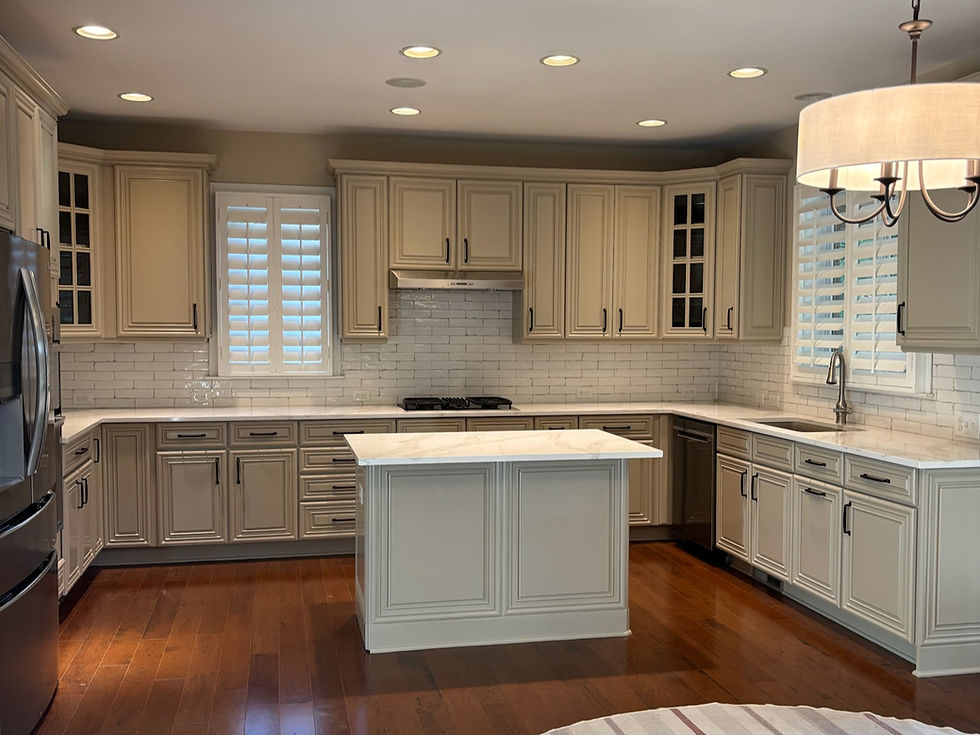
After
Have stained kitchen cabinets and want a brighter, more modern kitchen? You are not alone. Many Charlotte homeowners are choosing to update stained wood cabinets with a clean painted finish. Yes, you can paint stained cabinets, but only if the prep work is done correctly. Stained and varnished surfaces are notorious for rejecting paint when shortcuts are taken.
If you want a smooth, durable, factory-quality finish, the right process makes all the difference. We proudly serve Charlotte, Matthews, Weddington, and South Charlotte. Here is what you should know before starting.
Why More Charlotte Homeowners Are Painting Stained Cabinets
For decades, stained wood cabinets were one of the most popular kitchen finishes. Oak, maple, and cherry cabinets were often chosen for their natural warmth and durability. While these cabinets are still structurally sound, many homeowners feel that darker wood tones make their kitchens appear dated, darker, or smaller than they would like.
Painting existing cabinets allows homeowners to preserve the quality of their cabinetry while achieving a completely different look. Instead of investing in a costly kitchen renovation, many families in Charlotte, Matthews, Weddington, and South Charlotte are choosing cabinet painting as a practical way to modernize their homes.
A fresh painted finish can dramatically brighten a kitchen, create a more open feeling, and help coordinate the space with updated countertops, backsplashes, flooring, and lighting. In many cases, cabinet painting provides the visual impact of a full remodel without the significant cost and disruption associated with replacing cabinets.
Why Painting Stained Cabinets Is Tricky
Stained cabinets look warm and classic, but the finish underneath creates several challenges for paint adhesion.
1. Varnish Blocks Paint From Sticking
Most stained cabinets are sealed with lacquer or polyurethane. These coatings are slick and resistant to paint. Without proper deglossing and a bonding primer, the new finish will peel or chip.
2. Wood Grain Needs the Right Filling and Sanding
Open-grain woods like oak require extra prep to achieve a smooth painted finish. Pros fill and sand the grain carefully so it does not show through the final coat.
3. Tannins Can Bleed Through Paint
Some hardwoods release tannins that stain lighter paints. High-quality primers designed to block tannin bleed are essential for a clean, even finish.
Not All Stained Cabinets Are the Same
One of the reasons professional cabinet painting requires experience is that every cabinet material responds differently during the preparation process. Oak cabinets, for example, have a prominent grain pattern that often requires additional filling and sanding to achieve a smooth, modern appearance. Maple cabinets typically have a tighter grain structure but may require specialized primers to ensure proper adhesion. Cherry cabinets can present unique challenges due to tannin bleed and color migration.
Understanding how different wood species react to cleaning, sanding, priming, and spraying allows professionals to create a finish that looks consistent and durable. Skipping these material-specific considerations often leads to disappointing results and visible imperfections in the final product.
How Professionals Transform Stained Cabinets
A long-lasting result starts with understanding how stained wood behaves. Here is how pros handle it.
Step 1: Deep Cleaning and Deglossing
Removing oils, residue, and the top layer of sheen is critical. This gives the primer a surface it can actually grip.
Step 2: Sanding Between Each Step
Light sanding ensures smooth bonding and helps prevent texture or grain from showing through.
Step 3: Applying a High-Bond Primer
A quality bonding primer creates a foundation that locks onto the old finish and prevents tannin bleed.
Step 4: Finishing With a Professional Spray System
To get a modern, furniture-grade look, professionals use sprayed cabinet finishes that level out smoothly. This avoids brush strokes, roller texture, and uneven coverage.
It is one of the main reasons homeowners hire cabinet painters in Charlotte when they want a bright, modern transformation.
Why a Sprayed Finish Matters for Stained Cabinets
Stained wood absorbs and reflects light differently than raw or primed wood. A sprayed finish creates:
A smooth, consistent surface
Strong adhesion for long-term durability
Even color without visible grain
A factory-smooth result that makes the whole kitchen look updated
If you want stained cabinets to look like they were always meant to be painted, spraying is the only method that delivers that level of refinement.
Choosing the Right Color for Previously Stained Cabinets
One of the most exciting parts of a cabinet painting project is selecting a new color. While bright white cabinets remain a timeless favorite, many homeowners are choosing softer and warmer tones that complement today's design trends. Popular cabinet colors include warm whites, greige tones, soft taupes, muted greens, navy blues, and charcoal shades.
The ideal color depends on several factors, including the amount of natural light in the room, countertop materials, flooring, and the overall style of the home. Lighter colors can make smaller kitchens feel larger and brighter, while darker shades create contrast and a more custom appearance.
When transforming stained cabinets, selecting the right color can completely change the mood of the room and help the kitchen feel more current without altering its layout or functionality.
Why Professional Preparation Makes the Difference
Many homeowners searching online for cabinet painting advice discover countless tutorials promising quick and easy results. Unfortunately, stained cabinets are often where DIY projects run into trouble. While applying paint may seem straightforward, achieving long-term durability requires a carefully planned process that addresses adhesion, stain blocking, surface smoothness, and proper curing.
Without the correct preparation, painted cabinets may begin to chip around handles, peel near frequently used doors, or develop discoloration as wood tannins bleed through lighter colors. These issues often do not appear immediately, making it difficult to know whether the project was successful until months later.
Professional cabinet painters use proven systems designed specifically for previously stained surfaces. From surface preparation and primer selection to spraying techniques and curing schedules, every step is intended to create a finish that not only looks beautiful on day one but continues performing for years.
Ready to Brighten Your Kitchen? We Can Help.
Our professional spraying system delivers the smooth, durable finish stained cabinets need. Whether your cabinets are oak, maple, cherry, or another hardwood, we provide results that look clean, modern, and built to last.
Frequently Asked Questions About Painting Stained Cabinets
Can stained oak cabinets be painted?
Yes. Oak cabinets are among the most common cabinet types that homeowners choose to paint. Because oak has a pronounced grain pattern, additional preparation may be required to achieve a smoother, more contemporary appearance.
Will wood grain show through painted cabinets?
It depends on the wood species and the desired finish. Some homeowners prefer a subtle grain texture, while others want a completely smooth appearance. Professional preparation techniques can significantly reduce the visibility of grain patterns when desired.
Do stained cabinets need to be sanded before painting?
Yes. Proper sanding and deglossing are critical parts of the preparation process. These steps help primers and coatings bond securely to the existing finish and contribute to the long-term durability of the project.
How long do painted stained cabinets last?
When prepared and painted professionally, cabinets can maintain their appearance for many years. The lifespan of the finish depends on the products used, the quality of the preparation, and how the cabinets are maintained over time.
Is it cheaper to paint cabinets or replace them?
In most cases, painting cabinets is significantly more affordable than replacing them. Homeowners can achieve a dramatic visual transformation while preserving cabinetry that is still structurally sound and functional.
Looking for More Cabinet Painting Tips?
If you are comparing different cabinet materials or planning a full kitchen refresh, you may also find our guide on painting plywood cabinets helpful. It explains how thin veneers, porous edges, and factory coatings affect the finish and why a sprayed application delivers the best results.


Comments